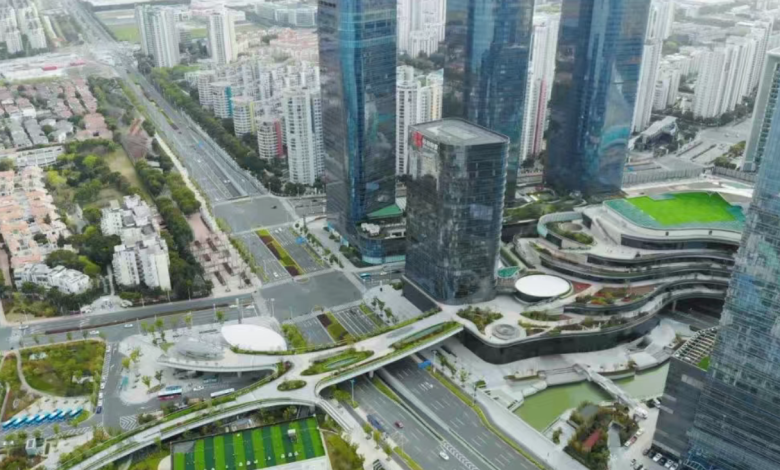
Suzhou, one of China’s most dynamic industrial cities, has once again demonstrated its resilience in the first half of 2025. According to official data, the city achieved a GDP of RMB 1.3 trillion, representing a 5.7% year-on-year increase. Suzhou now ranks sixth among major Chinese cities in terms of total economic output, with a growth rate that places it among the nation’s top 10.
The key driver of Suzhou’s economy remains its electronics industry, which has become deeply intertwined with global technology trends such as artificial intelligence, advanced semiconductors, and cross-border supply chains.
Industrial Powerhouse with Electronics at the Core
Suzhou’s industrial sector remains the backbone of growth, with above-scale industrial output expanding by 8% in the first half of the year. Among all industries, electronics stands out as the largest, employing over 840,000 workers directly and more than 1 million including outsourced labor.
The city’s electronics industry generated RMB 680 billion in output during H1 2025, up 7.5% year-on-year. Yet beneath this headline growth, structural differences are apparent: while consumer electronics like smartphones and PCs are declining, AI-related hardware, advanced printed circuit boards (PCBs), and semiconductor packaging are rising rapidly.
Consumer Electronics Under Pressure
The ongoing tariff disputes have weighed heavily on terminal products. Smartphone output in Suzhou fell 4.5% to 29.7 million units, PC production dropped 8.7% to 10.7 million units, and monitor shipments plunged more than 20%. Most of this decline is linked to Taiwanese contract manufacturers operating in the Suzhou area.
The contraction in consumer terminals has a direct knock-on effect on component makers. For example, Taiwanese “fruit-chain” suppliers saw mixed results: firms tied to AI server demand bucked the trend with strong growth, while those dependent on consumer products suffered.
Foxconn reported a 20% revenue increase and a 50% surge in profit thanks to AI servers, while Delta Electronics achieved a 54% profit jump driven by power supplies and liquid cooling solutions. Local suppliers in Suzhou, such as Fuyue Components and Kangzhun, also recorded unexpected gains due to their integration into AI server ecosystems.
Rising Stars: PCB and Optoelectronics
Two sectors achieved significant breakthroughs: display panels and printed circuit boards (PCB).
- Optoelectronics: Panel makers benefited from both stockpiling ahead of tariffs and Chinese government subsidies. AU Optronics’ Kunshan plant posted a profit of NT$760 million (RMB 180 million), a 450% increase. The sector also welcomed new investment in Micro-LED, signaling Suzhou’s ambition to climb the display technology ladder.
- PCB Manufacturing: Known as the “mother of electronics,” PCB is experiencing strong demand thanks to AI-driven servers, storage, and high-speed networking equipment. While Suzhou’s PCB output declined slightly in volume, profits surged for high-end multilayer and HDI boards. Taiwanese suppliers like Taiguang Electronics and local champions such as Dongshan Precision expanded aggressively into AI-PCB production and optical modules.
Semiconductor Sector: Stability with New Momentum
Semiconductors remain more resilient compared to consumer devices. Suzhou produced 20.1 billion packaged semiconductor units in H1, a slight 1.1% decline in volume but a 25% increase in export value.
Taiwanese firms remain a backbone, with UMC and its affiliates focusing on mature processes. While revenues were flat overall, Suzhou’s local wafer fabs recorded a 37% profit increase, underscoring the city’s role in supporting global chip demand.
Meanwhile, advanced packaging has become a hot spot. As Moore’s Law slows, CoWoS packaging—pioneered by TSMC—has gained traction. TSMC itself reported a 40% revenue jump and 60% profit increase in H1 2025, with GPUs and AI-related chips accounting for more than 60% of sales. Suzhou, as a hub for testing and packaging, now faces both challenges and opportunities as the global semiconductor industry pivots to advanced integration.
The Role of Distributors: China Chip Depot’s Perspective
The evolution of Suzhou’s electronics sector is not just about manufacturing. It also highlights the importance of global distributors of electronic components—companies that ensure the supply of semiconductors, transistors, diodes, connectors, and inductors to factories worldwide.
Michael Ma, CEO of China Chip Depot, shared his insights with NagoyaPost.com:
“Suzhou’s performance shows how fast the global electronics value chain is shifting. While consumer devices like smartphones are under pressure, AI-driven hardware demand is rewriting the rulebook. This translates directly into growing demand for components such as transistors, diodes, and power management ICs—areas where distributors like China Chip Depot play a vital role.”
Ma noted that distributors are increasingly tasked with balancing international supply chains while responding to demand for domestic alternatives in China.
“In high-end semiconductors, global giants remain dominant. But in segments like discrete transistors and diodes, Chinese manufacturers are gaining ground with cost-effective solutions. Distributors bridge this gap—delivering international brands while also offering competitive domestic options.”
China Chip Depot, based in Shenzhen, has built its reputation on reliable sourcing, transparent procurement, and fast delivery. With five in-house factories and partnerships with more than 500 semiconductor brands, the company is well-positioned to supply both AI-era components and mainstream devices.
Global Context: AI as the Growth Engine
The underlying driver of Suzhou’s resilience is clear: AI computing and smart applications. From servers and data centers to automotive electronics, AI has become the defining growth engine.
- Server Power Supplies & Cooling: Delta and others reported strong sales growth linked to AI server demand.
- High-End PCBs: Demand for multilayer boards in cloud and networking surged.
- Optical Communications: Local firms like Accelink are booming as “AI shovel sellers,” reporting profit growth of up to 87%.
As AI reshapes global industries, Suzhou’s factories are rapidly pivoting from traditional consumer devices to the infrastructure of the AI economy.
Risks and Challenges
Despite the optimistic numbers, challenges remain:
- Trade Barriers: U.S.–China tensions and tariffs continue to weigh on consumer electronics exports.
- Overcapacity Risks: Subsidies and rapid expansion may create structural overcapacity in lower-margin sectors.
- Talent Competition: AI-related semiconductor packaging requires specialized engineers, intensifying the talent war among Chinese tech hubs.
Conclusion: Suzhou and the Global Supply Chain
Suzhou’s mid-year economic data paints a picture of structural transformation: consumer electronics shrinking, AI-driven components rising, and semiconductors stabilizing with advanced packaging on the horizon.
For global buyers and distributors, the implications are profound. Companies like China Chip Depot are central to ensuring that the flow of semiconductors, transistors, diodes, and other critical components remains steady, reliable, and cost-effective.
As Michael Ma summarized:
“Suzhou’s story is really the story of the global electronics industry. We are moving into an AI-first world, where the winners will be those who can adapt quickly, secure reliable component supply, and balance cost with innovation.”
With AI and next-generation electronics reshaping demand, Suzhou is not just catching up—it is positioning itself as a vital player in the global semiconductor race. And in this transformation, distributors like China Chip Depot will be indispensable bridges between manufacturers, innovators, and markets worldwide.