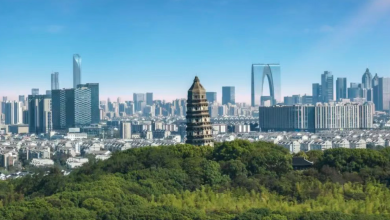
Introduction: A Flagship of China-Singapore Cooperation
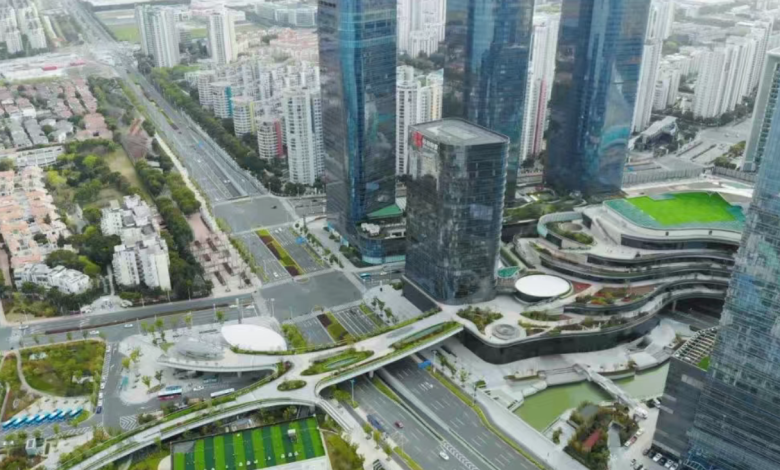
Since its establishment in 1994 as a landmark China-Singapore government project, Suzhou Industrial Park (SIP) has transformed from marshland into a global innovation hub. With GDP exceeding ¥400 billion ($55 billion) in 2024 and a 7% growth rate, SIP exemplifies how strategic planning and open policies can drive high-quality development.
Having visited SIP multiple times, I’ve witnessed its evolution—where futuristic skyscrapers stand alongside cutting-edge biotech labs, and multinational R&D centers collaborate with local startups. This is not just an industrial zone; it’s a blueprint for China’s next-phase economic modernization.
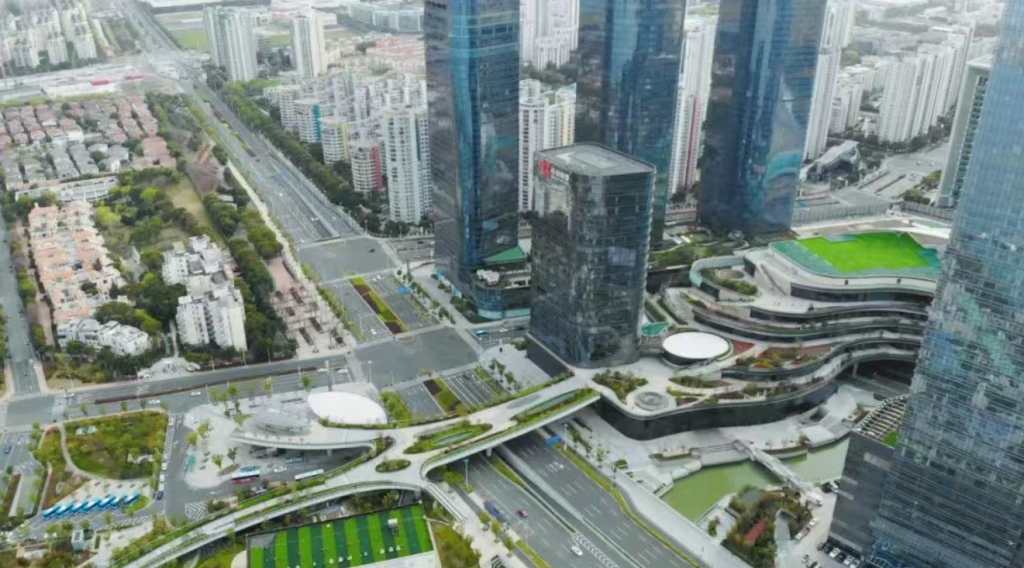
Economic & Industrial Breakthroughs
The “623” Industrial Ecosystem
SIP’s success stems from its “6 clusters + 23 key chains” strategy:
✔ Next-gen IT (Semiconductors, AI chips)
✔ Biotech & Healthcare (No.1 in China for talent & innovation)
✔ Nanotech & Advanced Materials (Top 5 global hub)
✔ Green Energy (Solar, hydrogen economy)
Case in point: Jinglong Technology, a semiconductor testing leader, leveraged SIP’s supply chain networks to double its production capacity after a state-backed merger.
Future-Proofing with Emerging Sectors
SIP is betting big on:
- Quantum computing (3 national labs established)
- Metaverse & Digital Finance (Pilot zones launched in 2024)
- Low-Altitude Economy (Drone logistics R&D base)
Data point: R&D spending accounts for 5.61% of GDP—outpacing China’s average (2.4%).
Innovation Engine: Talent & Enterprises
Powerhouse of Tech Giants & Startups
- 3,054 national high-tech firms
- 148 “Little Giant” specialized SMEs
- 70 listed companies (22 on STAR Market)
Standout example: Rongqi Industrial, an intelligent instrument maker, went public in 2023 with SIP’s guidance on IP protection and automation subsidies.
Global Talent Magnet
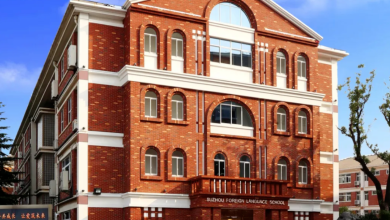
With 424 top-tier experts and 30+ international schools, SIP offers:
🎓 Joint PhD programs (e.g., with NUS Singapore)
💼 Tax incentives (15% vs standard 25% corporate rate)
🏡 Tier-1 livability (Ranked China’s best eco-park)
Firsthand insight: At Cold Spring Harbor Asia Conferences, I met scientists from Novartis and BeiGene collaborating in SIP’s BioBAY incubator.
Institutional Innovation: The SIP Advantage
Government-Enterprise Synergy
SIP’s “visible hand” approach includes:
- “Sandbox” policies for fintech/blockchain trials
- One-stop approval (Projects greenlit in ≤15 days)
- State-fund matching (Up to ¥50M for unicorns)
Contrast: Unlike Shanghai’s free-trade zone, SIP focuses on manufacturing-innovation integration.
Sino-Singaporean Upgrades
2025 marks 35 years of diplomatic ties, with SIP:
🔹 Launching a new cross-border data corridor
🔹 Expanding Singapore-style arbitration courts
🔹 Co-developing AI ethics frameworks
Challenges & The Road Ahead
Pressure Points
⚠ Land constraints (Only 288 km²) → Vertical industrial parks now prioritized
⚠ Tech decoupling risks → Accelerating domestic IP creation
⚠ Carbon neutrality goals → All new factories must meet LEED Gold
2030 Vision: “Four Highlands + One Model”
- Global open innovation node
- Sci-tech hub (10+ national labs)
- Advanced manufacturing base
- Model for Chinese modernization
My take: SIP’s real test is scaling its model to other Chinese tech parks—like Hefei’s “Quantum Valley.”
Why SIP Matters Globally
Beyond being a manufacturing powerhouse, SIP demonstrates:
✅ How planned economies can foster innovation
✅ The art of balancing state guidance with market forces
✅ A template for Global South industrial upgrading
Final thought: As Western tech hubs face stagnation, SIP’s 15% annual FDI growth (2024) proves China’s innovation ecosystem is far from peaking.
For investors/businesses: SIP’s 2025-30 Action Plan (releasing Q3) will detail incentives in photonics and biomanufacturing—worth monitoring.